
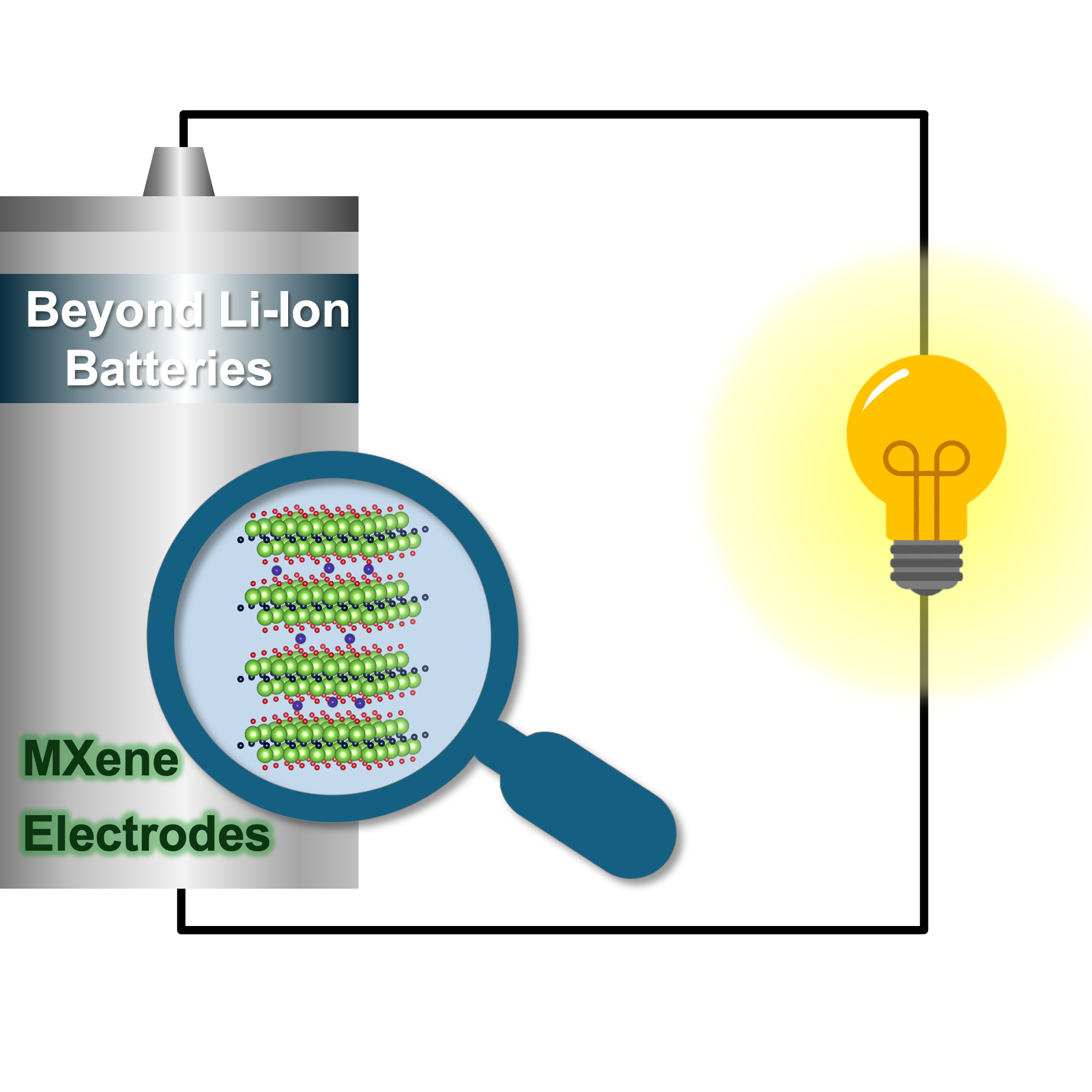
MXene-based cathode development for beyond Li-ion energy storage systems
My research focuses on developing advanced MXene-based materials for next-generation multivalent batteries. Specifically, I investigate different strategies to enhance the electrochemical performance of MXene cathodes, particularly in capacity, stability, and ion transport properties.
Additionally, I investigate designing and implementing various MXene compositions and hybrid structures specifically for energy storage applications. A critical aspect of my research involves analyzing the influence of structural and chemical modifications on energy storage behavior to elucidate the fundamental mechanisms that contribute to performance enhancements.
My research combines materials synthesis, electrochemical testing, and in-depth structural characterization to contribute to the rational design of high-performance energy storage systems
- Dr. Yeonjin Baek, Ph.D.
Advanced MXene‐Enabled Energy Storage: Mechanistic Etching, 3D‑Printed Microdevices, and AI‑Driven Electrolyte Discovery
My research portfolio centers on advanced materials science and electrochemical systems, bridging fundamental mechanistic understanding with practical applications in energy storage technologies. Currently, my work encompasses three principal research directions.
The first direction focuses on unraveling the mechanistic and kinetic aspects of Ti₃AlC₂ MAX phase transformation to Ti₃C₂ MXene via controlled and selective electrochemical etching. Through systematic investigation of electrolyte systems, surface chemistry effects, and in-situ characterization of the etching process, we are developing comprehensive insights into the relationship between surface pretreatment, electrolyte composition, and reaction pathways. This fundamental understanding guides the development of efficient, sustainable synthesis protocols for large-scale MXene production.
The second research thrust advances microscale energy storage through the integration of MXene materials with precision 3D printing technologies. This work directly addresses the increasing demand for miniaturized energy storage solutions in flexible electronics and integrated systems.
The third direction employs high-throughput experimentation and machine learning approaches to accelerate the discovery of optimal electrolyte formulations for zinc-ion batteries. By combining automated experimentation platforms with Bayesian optimization algorithms, we are efficiently exploring vast compositional spaces to identify promising electrolyte candidates. This data-driven methodology significantly expedites the development cycle of advanced zinc-ion battery systems.
These work aims to address critical challenges in energy storage while contributing to the broader field of materials electrochemistry.
-Dr. Poulomi Nandi, Ph.D.
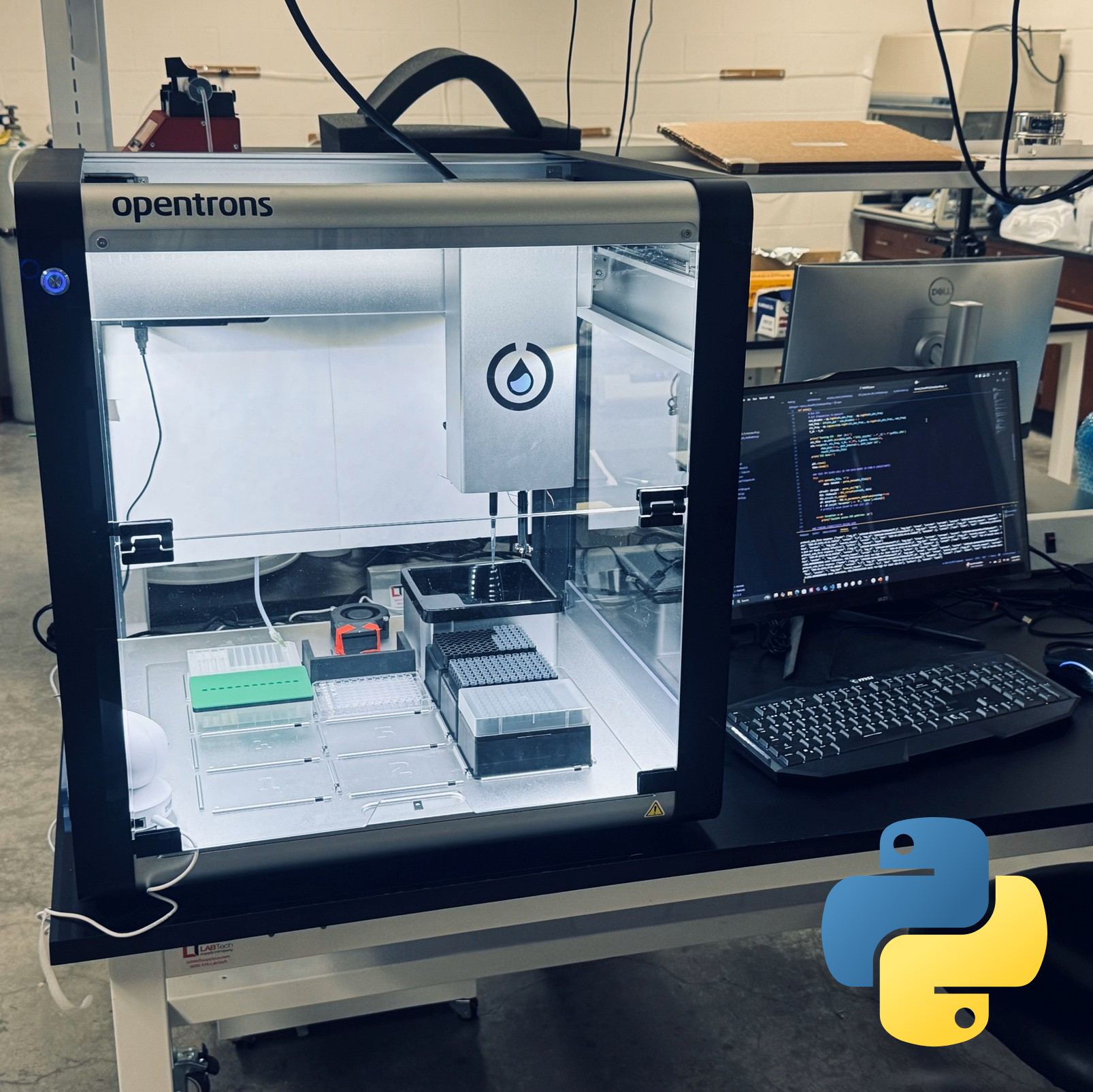
AI-Driven Electrochemical Experimentation.
My work centers on building autonomous laboratory systems that integrate robotic platforms with electrochemical instruments. These self-driving labs automate tasks such as electrolyte preparation, liquid handling, and real-time electrochemical measurements, enabling high-throughput experimentation with minimal manual input.
To guide experimentation intelligently, I apply machine learning and Bayesian optimisation techniques. These tools allow the system to adaptively choose new experiments based on prior results, accelerating the search for optimal formulations and material behaviours. My research aims to transform how electrochemical discovery is approached by combining AI-driven decision-making with physical lab automation.
- Mohamadreza Ramezani
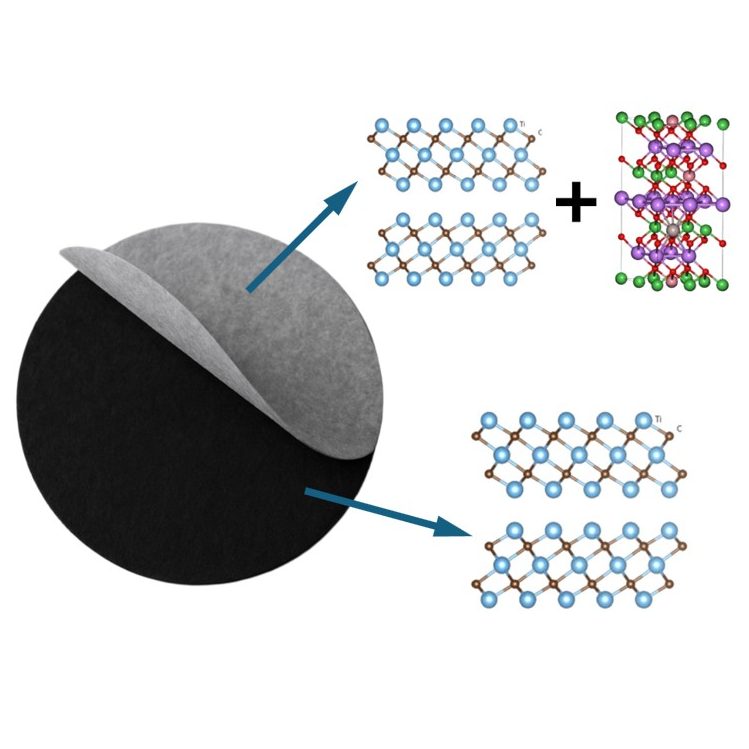
Reusability of MXene and MXene as a current collector and binder.
With advancements in battery technology, there is a growing demand for solutions that minimize dead weight from current collectors, reduce environmental toxicity from traditional binders, and enable recyclability of battery components. My current project aims to address all these challenges. I plan to use MXene as both the current collector and the binder, materials that have already been individually tested and certified for these purposes. The project also seeks to develop a viable method for recycling the MXene used within the cell, moving toward a more sustainable and circular battery design.
- Alif Jawad
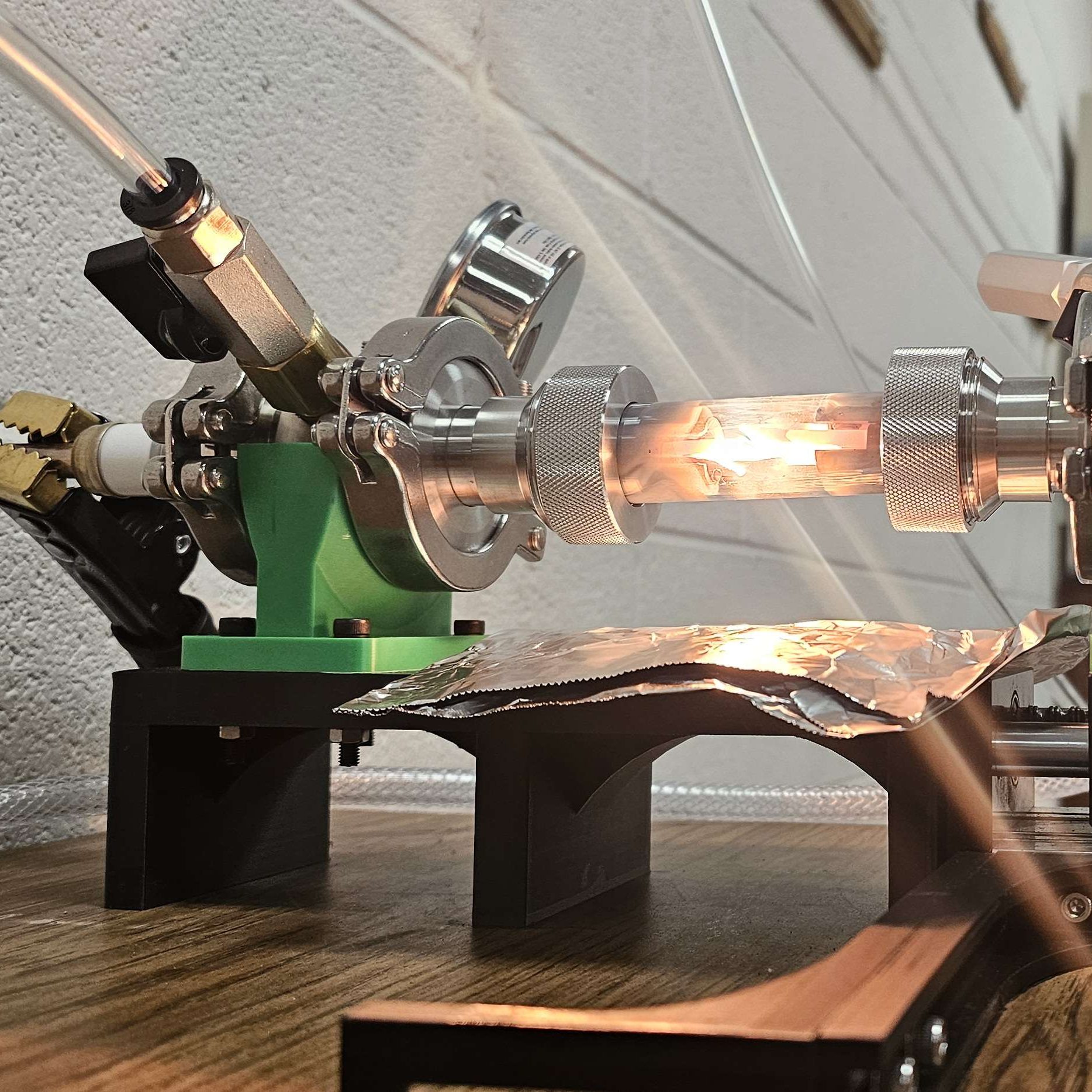
Flash Jule Heating for MAX phase Synthesis
My research focuses on developing a flash Joule heating (FJH) reaction system to synthesize high-purity Ti₃AlC₂ MAX phase materials. While conventional methods such as spark plasma sintering (SPS) and molten salt synthesis can produce high-purity products, they are often limited by high costs, extended processing times, and scalability challenges. In contrast, this project adapts techniques originally developed for graphene production to enable rapid, cost-effective synthesis with reduced operational complexity. By achieving comparable or superior material quality in a fraction of the time, this work offers a transformative approach to MAX phase synthesis for both laboratory and industrial-scale applications.
- Pablo De La Fuente
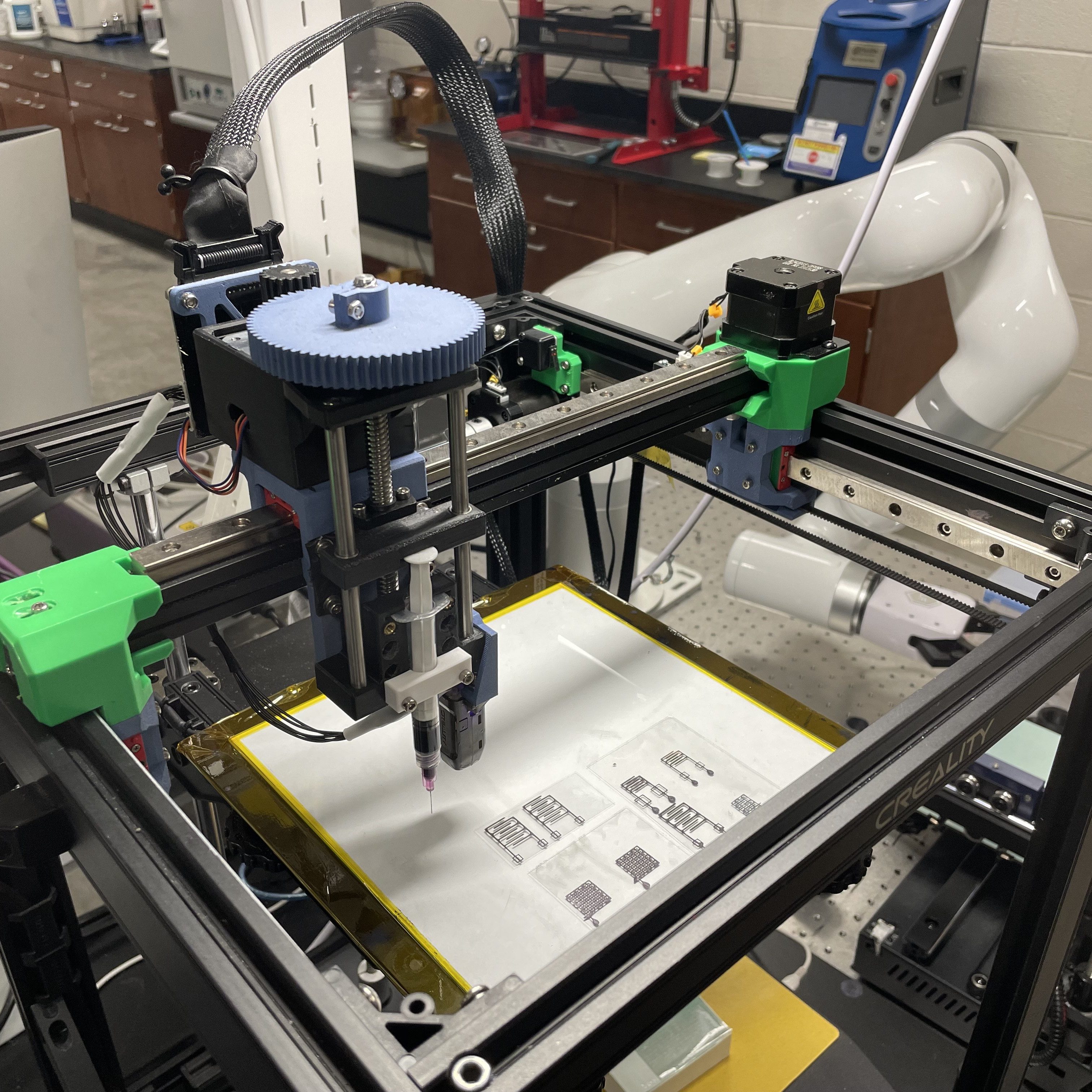
DIW 3D Printing of MXene Inks
My Work focuses on developing a cost-effective Direct Ink Writing (DIW) 3D printer designed for use with MXene based inks. DIW is an additive manufacturing technique that creates three-dimensional structures by precisely extruding viscous materials through a fine nozzle. A key challenge with MXene inks is achieving reliable and consistent printability due to their complex rheological behavior. To address this, a quantitative scoring method based on image analysis of printability test results is being developed. This approach evaluates print quality by measuring features such as line width uniformity, structural fidelity, and spreading factor. The resulting score enables objective comparisons across different ink formulations and printing conditions, helping identify parameters that yield stable, high quality prints
- Daniel Meles
 Beidaghi Lab